
Introduction
Choosing the right stokvel Portal can help your group manage members, contributions, payment proofs, payouts and financial records more efficiently. However, platforms can differ in pricing, features, security and ease of use.
This guide examines Stokvel Portal across the areas that matter most, helping savings groups, burial societies, grocery stokvels, investment clubs and other community organisations decide whether it meets their needs.
Table of Contents
Purpose and Target Users
Stokvel Portal is designed to help stokvels manage their members, contributions, expenses, payouts and financial records in one secure place. It replaces scattered spreadsheets, paper records and WhatsApp messages with a structured system that is easier for both committee members and ordinary members to use.
The platform is particularly useful for chairpersons, treasurers and secretaries who are responsible for managing contributions, confirming payments and preparing financial reports. Members can also use the Stokvel Portal to view their payment history, outstanding contributions, statements and important group information. This improves transparency and reduces misunderstandings about the stokvel’s finances.
Introduction
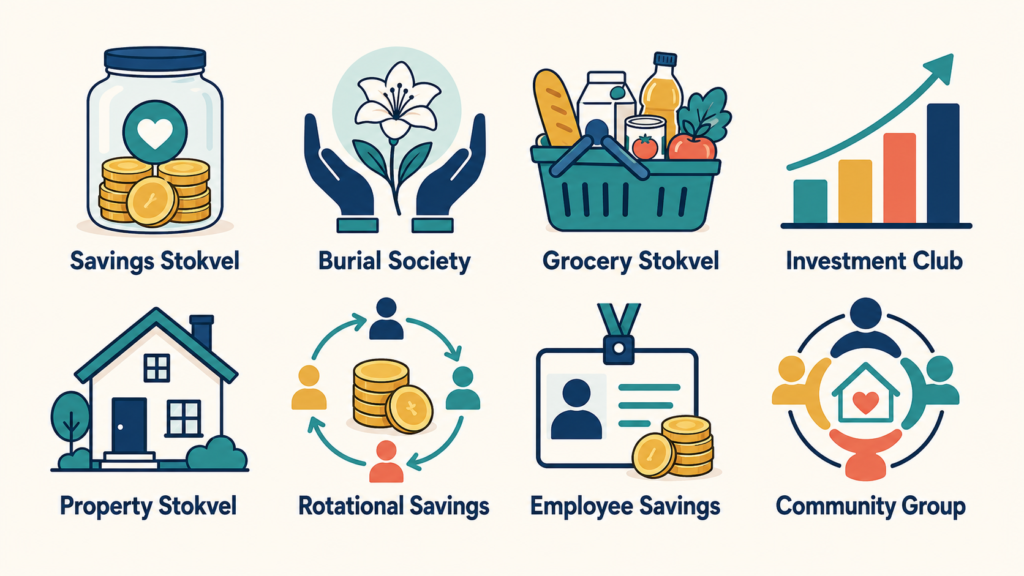
A Stokvel Portal can support different types of community savings groups, including:
- Traditional savings stokvels
- Burial societies
- Grocery stokvels
- Investment clubs
- Property investment stokvels
- Rotational savings groups
- Employee savings clubs
- Community development groups
Small stokvels may use the platform to simplify basic contribution tracking, while larger societies can benefit from member permissions, approval processes, detailed reports and organised financial records. The best platform should therefore match the stokvel’s size, purpose and level of financial activity.

Registration and Ease of Setup
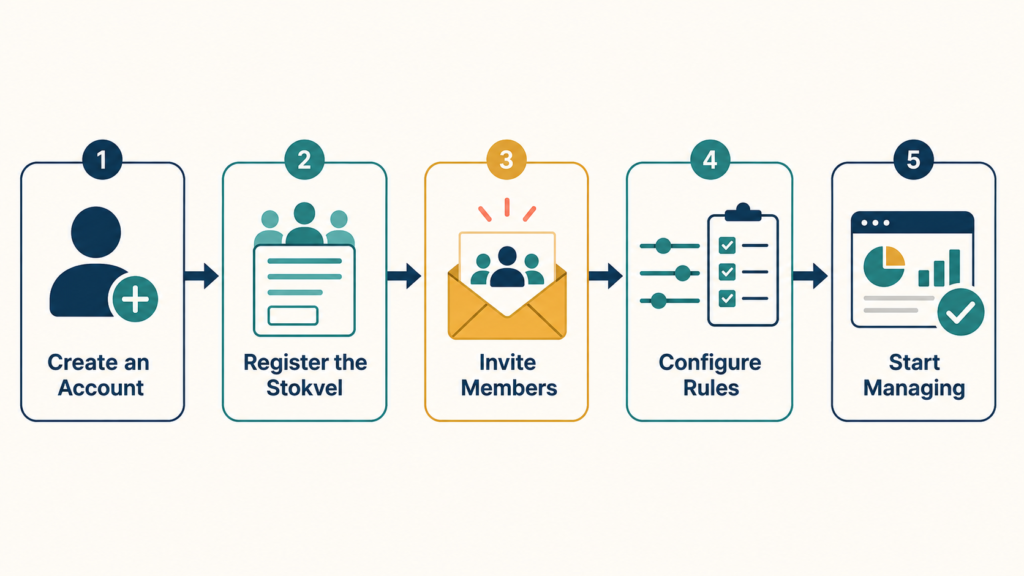
A good Stokvel Portal should make it easy for a group to register and start managing its activities without requiring advanced technical knowledge. The registration process should be clear, quick and accessible from either a computer or smartphone.
Typically, the chairperson, secretary or authorised committee member creates the stokvel’s account. During registration, the administrator may provide basic information such as the stokvel’s name, contact details, type, contribution frequency and number of members.
After creating the account, the administrator can invite members to join the Stokvel Portal using their email addresses, mobile numbers or secure invitation links. Each member then creates a personal profile and gains access to the appropriate stokvel information.
The setup process may also allow the committee to configure important rules, including:
- Contribution amounts and payment dates
- Weekly, monthly or annual payment schedules
- Committee positions and user permissions
- Payout arrangements
- Penalties for late or missed payments
- Approval requirements for expenses and disbursements
A user-friendly setup process reduces administrative work and helps the stokvel begin using the platform quickly. When comparing different products, consider how many steps registration requires, whether onboarding guidance is provided and how easily existing member records can be added.
Member Management
Effective member management is essential for keeping a stokvel organised. A Stokvel Portal allows authorised committee members to add new members, update their information and maintain accurate membership records from one central location.
Each member can have an individual profile containing important details such as their name, contact information, date joined, membership status and contribution history. Keeping these records digitally reduces the risk of information being lost in paper files, spreadsheets or WhatsApp conversations.

The administrator can also assign roles and permissions based on each person’s responsibilities. Common roles may include:
- Chairperson
- Deputy chairperson
- Treasurer
- Secretary
- Committee member
- Ordinary member
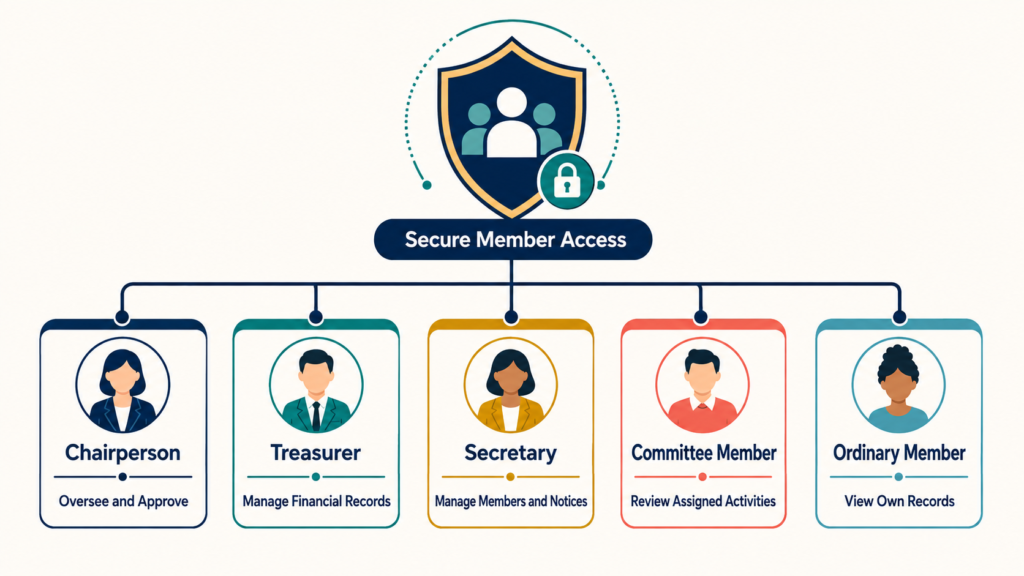
These permissions help control what each person can view or manage. For example, a treasurer may record contributions and review payment proofs, while an ordinary member may only view their own transactions, statements and stokvel announcements.
A reliable Stokvel Portal should also make it easy to activate, suspend or remove members without deleting their historical financial records. This ensures that the stokvel maintains a complete and accurate record of past and present membership.
When comparing member-management features, consider how easily members can be added, whether records can be imported in bulk and whether the platform provides secure role-based access. The system should be simple enough for everyday use while giving the committee proper control over sensitive information.
Contribution Tracking
Contribution tracking is one of the most important functions of a Stokvel Portal. It gives the committee a clear record of how much each member should contribute, what has already been paid and which payments are still outstanding.
Instead of manually updating notebooks or spreadsheets, the treasurer can record contributions in one central system. Each payment can be linked to the correct member, contribution period and payment method. This helps prevent duplicate entries, missing records and calculation errors.

A Stokvel Portal should allow the committee to monitor:
- Expected contribution amounts
- Payments received
- Payment dates and methods
- Partial payments
- Late or missed contributions
- Outstanding balances and arrears
- Penalties charged according to the stokvel’s rules
- Each member’s complete contribution history
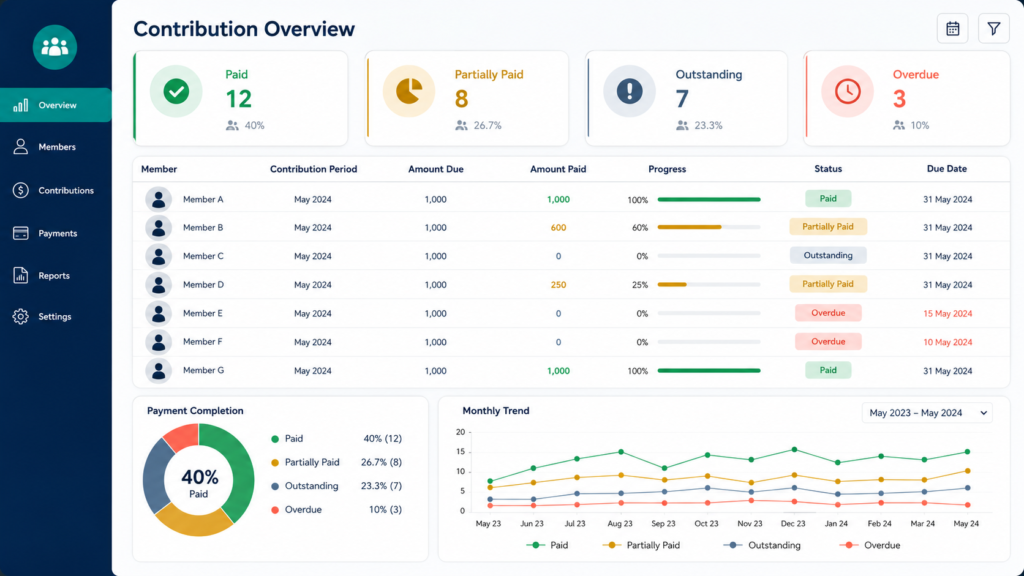
Members should be able to view their own contribution records without seeing another member’s private information. This gives them an opportunity to confirm that payments were recorded correctly and report possible errors early.
The platform may also use clear payment statuses such as Paid, Partially Paid, Outstanding and Overdue. These labels allow the treasurer to identify payment problems quickly and follow up with the relevant members.
Accurate contribution tracking improves transparency, simplifies reconciliation and makes it easier to prepare financial reports. When comparing platforms, check whether contribution schedules can be customised, whether arrears are calculated automatically and whether records can be exported for review or auditing.
Payment-Proof Management
Payment-proof management helps a stokvel confirm that every contribution has been received and assigned to the correct member. A Stokvel Portal allows members to upload proof of payment directly from a smartphone or computer instead of sending it through WhatsApp or email.
When submitting payment proof, the member can provide details such as the amount paid, payment date, contribution period and payment reference. The uploaded receipt or bank confirmation is then linked to the member’s profile and contribution record.
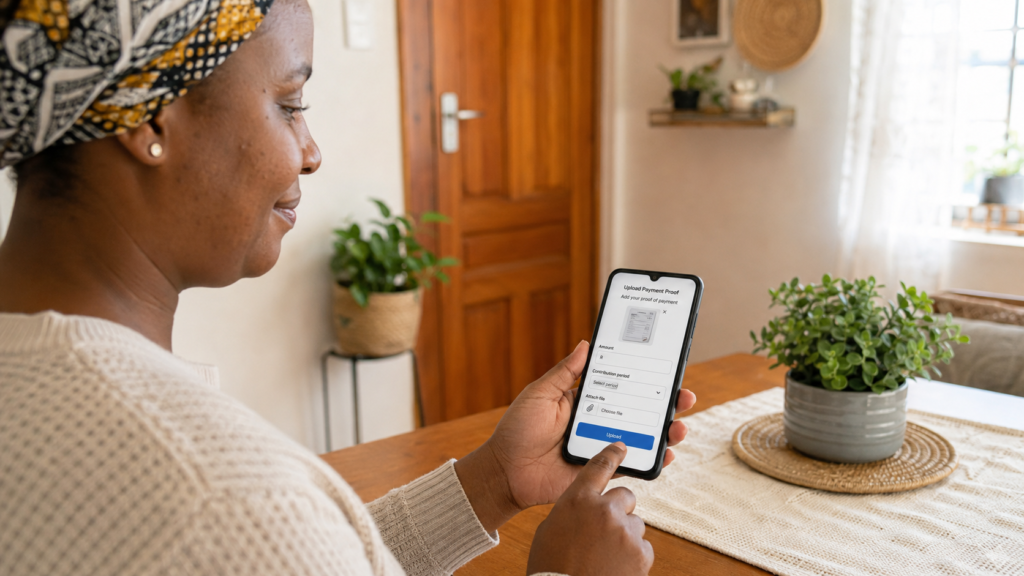
The treasurer or another authorised committee member can review each submission and mark it as:
- Pending review
- Approved
- Rejected
- More information required
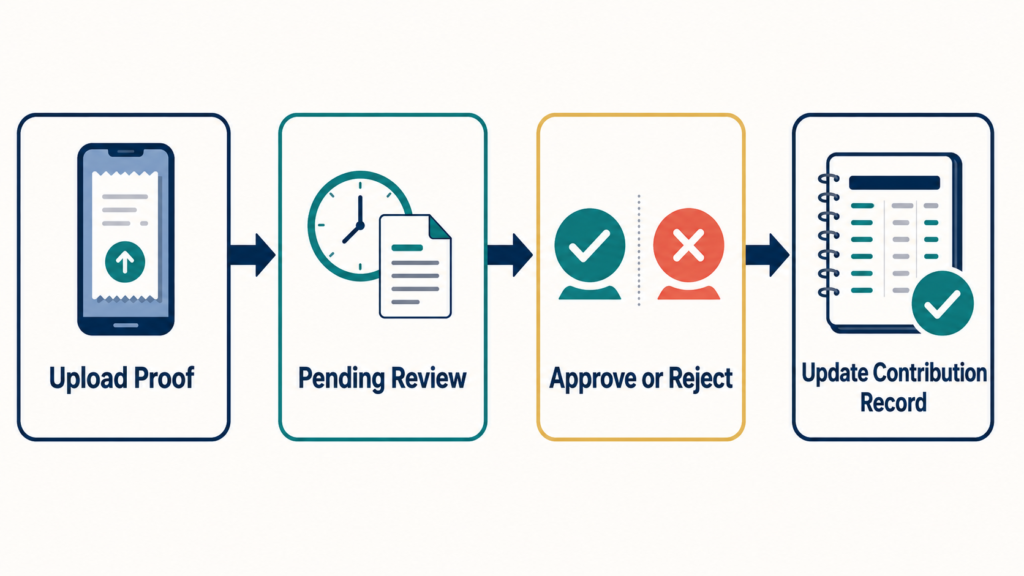
Once approved, the payment can be added to the member’s contribution history. If the proof is unclear, duplicated or does not match the expected amount, the reviewer can reject it or request additional information. The system should keep a record of who reviewed the submission, when it was reviewed and why its status changed.
A reliable Stokvel Portal should also protect uploaded documents from unauthorised access. Members should only see their own payment proofs, while authorised committee members should have access to the information needed for verification.
Digital payment-proof management creates a clear audit trail, reduces disputes and prevents important records from becoming lost in chat conversations. When comparing platforms, consider how easy it is to upload documents, which file formats are accepted, whether duplicate submissions can be detected and how quickly reviewers can approve payments.
Financial Records and Transparency
Clear financial records are essential for building trust among stokvel members. A Stokvel Portal keeps contributions, expenses, payouts and other transactions organised in one central system, making it easier to understand how the group’s money is being managed.
Every financial transaction should include important information such as the date, amount, transaction type, responsible person and supporting document. This creates a reliable history that the committee can review whenever questions arise.

A Stokvel Portal may record financial activities such as:
- Member contributions
- Late-payment penalties
- Stokvel expenses
- Supplier payments
- Member payouts
- Refunds and adjustments
- Interest or investment income
- Bank charges and administration fees
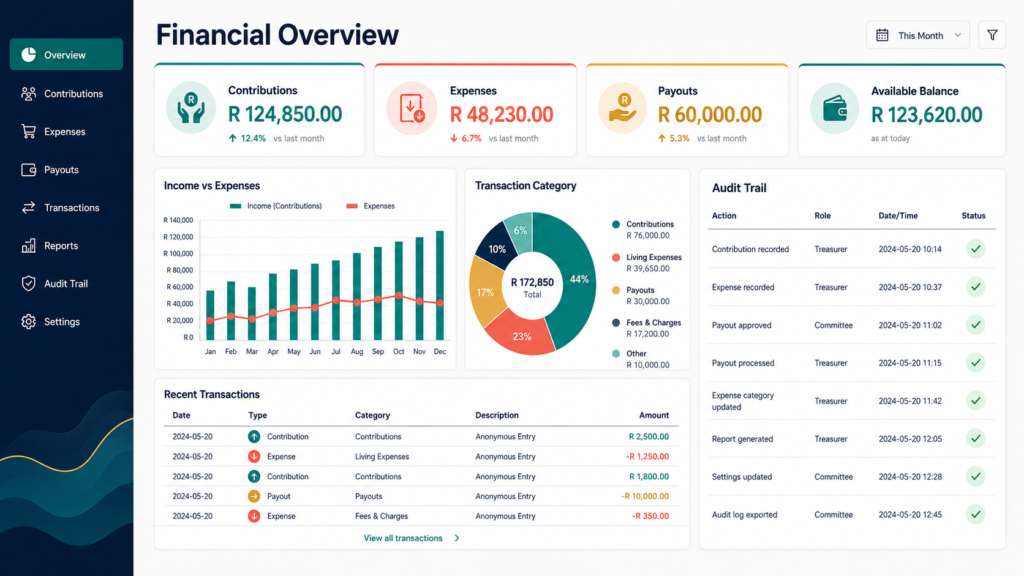
Authorised members should be able to view relevant balances, income, expenses and transaction histories. However, access must be controlled so that members only see information appropriate to their roles. For example, the treasurer may access detailed financial records, while ordinary members may view approved summaries and their own transactions.
The platform should also maintain an audit trail showing who created, approved or changed a financial entry and when the action occurred. Records should not be silently changed or deleted. If a correction is required, the system should keep both the original entry and the adjustment.
This level of transparency helps committee members account for every transaction and gives members greater confidence in the stokvel’s management. It also makes it easier to identify errors, investigate disputes and prepare for internal or independent financial reviews.
When comparing platforms, consider whether financial records are updated promptly, whether supporting documents can be attached and whether all important actions are recorded. The best system should make the stokvel’s financial position easy to understand without exposing sensitive information unnecessarily.
Reports and Member Statements
Reports and member statements help a stokvel understand its financial position and keep members informed. A Stokvel Portal uses the financial information recorded in the system to generate organised reports without requiring the committee to combine data manually from notebooks, spreadsheets and WhatsApp messages.

Authorised committee members can select a reporting period and generate reports for a specific month, quarter or financial year. Depending on the platform, these reports may include:
- Contribution summaries
- Outstanding-contribution and arrears reports
- Income and expense reports
- Member balance reports
- Payout and disbursement reports
- Transaction histories
- Cash-flow summaries
- Audit-trail reports
- Year-end financial summaries
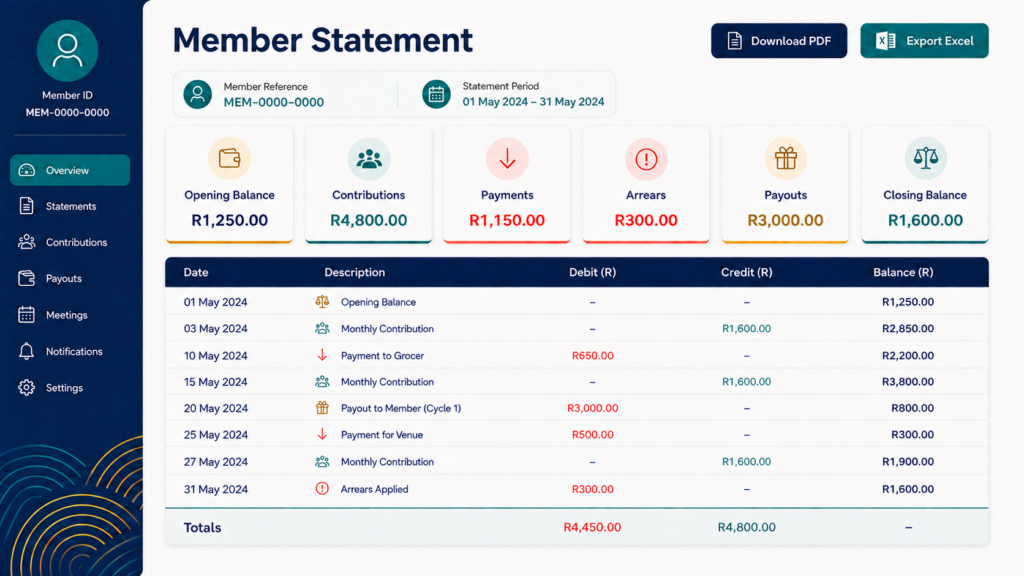
The Stokvel Portal should also provide each member with a personal statement. This statement can show expected contributions, payments received, outstanding balances, penalties, payouts and any adjustments made to the member’s account.
For greater clarity, every member statement should display the reporting period, opening balance, transaction details and closing balance. Members should only have access to their own statements, while committee members receive access according to their assigned roles and permissions.
Reports and statements should be available to view online, print or download in formats such as PDF or Excel. The platform may also allow authorised administrators to send statements securely to individual members.
Accurate reports make committee meetings more productive because decisions can be based on current financial information. They also help members identify errors early, improve accountability and provide organised records for audits or leadership handovers.
When comparing different platforms, consider whether reports are generated automatically, whether they can be filtered and whether the information is easy for members without accounting experience to understand. A reliable Stokvel Portal should turn complex financial records into clear and useful reports.
Payout and Disbursement Management
Payout and disbursement management helps a stokvel control how money is distributed to members, suppliers or service providers. A Stokvel Portal provides a structured process for creating, reviewing, approving and recording each payment.
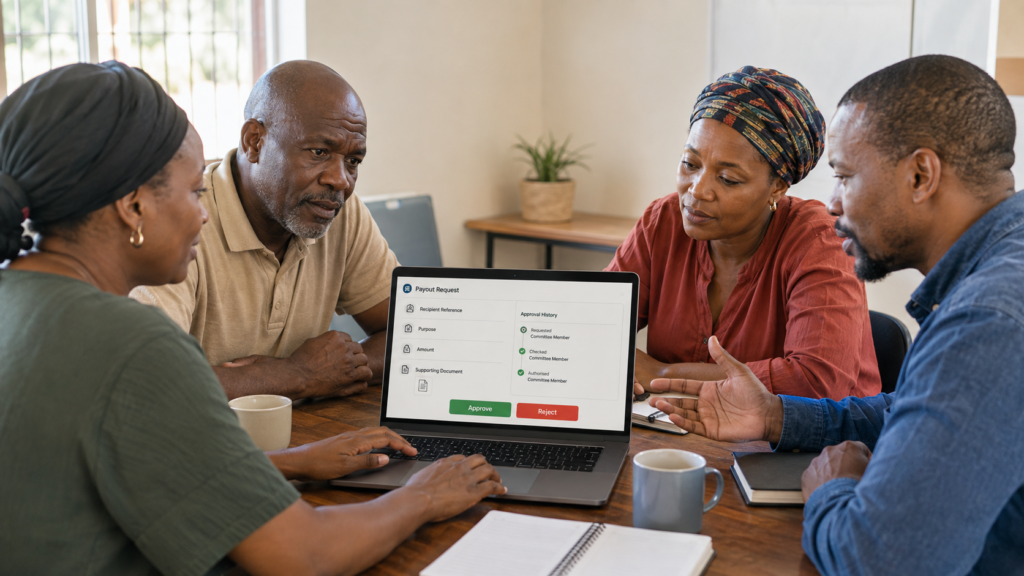
An authorised committee member can create a payout request containing important details such as the recipient, amount, payment purpose, due date and supporting documents. The request can then be sent to designated committee members for approval before any money is released.
A Stokvel Portal may support different types of disbursements, including:
- Scheduled member payouts
- Rotational stokvel distributions
- Funeral-benefit payments
- Grocery and supplier payments
- Investment distributions
- Refunds to members
- Approved operating expenses
- Emergency assistance payments
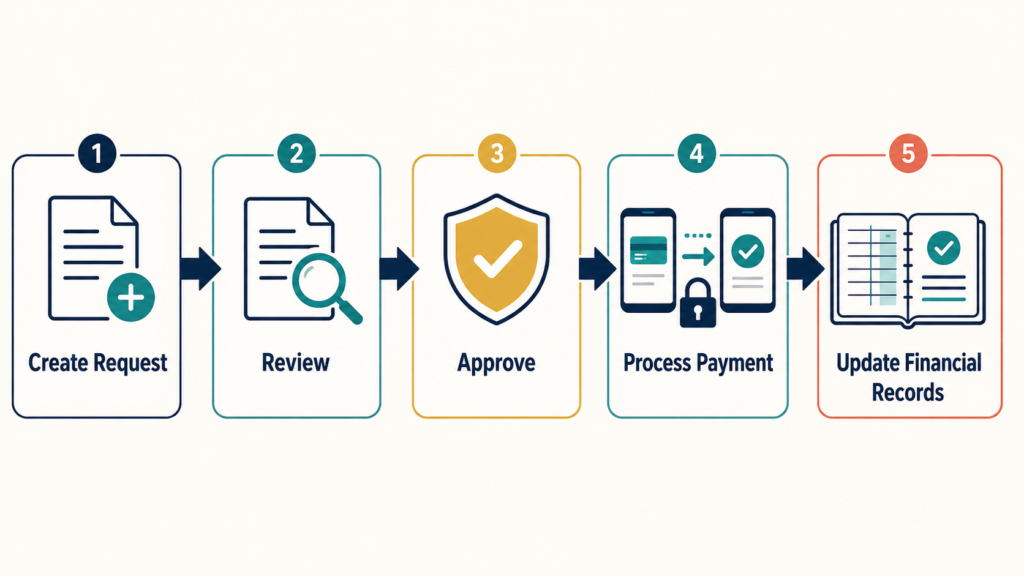
To protect the stokvel’s funds, larger or sensitive payments may require approval from two or more authorised committee members. The system should show whether a payout is Pending, Approved, Rejected, Processing, Paid or Cancelled.
Once a payout has been completed, it should be linked automatically to the recipient’s record and the stokvel’s financial ledger. Payment references, supporting documents and proof of payment should also be stored for future review.
The platform should maintain an audit trail showing who requested the payout, who approved it, when it was processed and whether any changes were made. This reduces the risk of unauthorised payments and makes it easier to investigate questions or disputes.
Members should receive appropriate notifications when their payouts are approved or completed. However, sensitive banking details must remain protected and only be accessible to authorised users.
When comparing platforms, consider whether they support multiple approvals, scheduled payments, payout limits and downloadable disbursement reports. A reliable Stokvel Portal should make every payout traceable while keeping the approval process simple and secure.
Security, Privacy and POPIA Compliance
A Stokvel Portal may store sensitive information such as members’ names, contact details, identity information, payment records and supporting documents. Strong security and privacy controls are therefore essential for protecting members and maintaining trust.
In South Africa, the Protection of Personal Information Act, commonly known as POPIA, regulates how personal information is collected, used, stored and shared. Information should be collected for a specific and lawful purpose, and the stokvel should only request information that is genuinely needed to provide its services. POPIA requires responsible parties to protect the integrity and confidentiality of personal information.
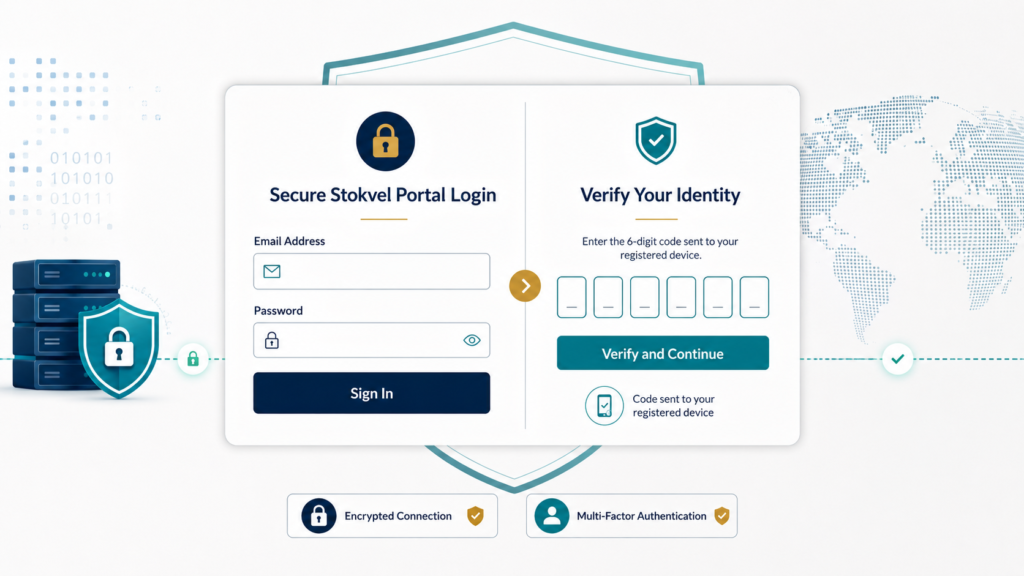
A secure Stokvel Portal should provide safeguards such as:
- Secure passwords and account-recovery processes
- Multi-factor authentication where available
- Encryption during transmission and storage
- Role-based access permissions
- Automatic session timeouts
- Secure backups and recovery procedures
- Activity logs and audit trails
- Regular security updates and vulnerability testing
- Restricted access to payment proofs and banking information
- Procedures for detecting and responding to security incidents
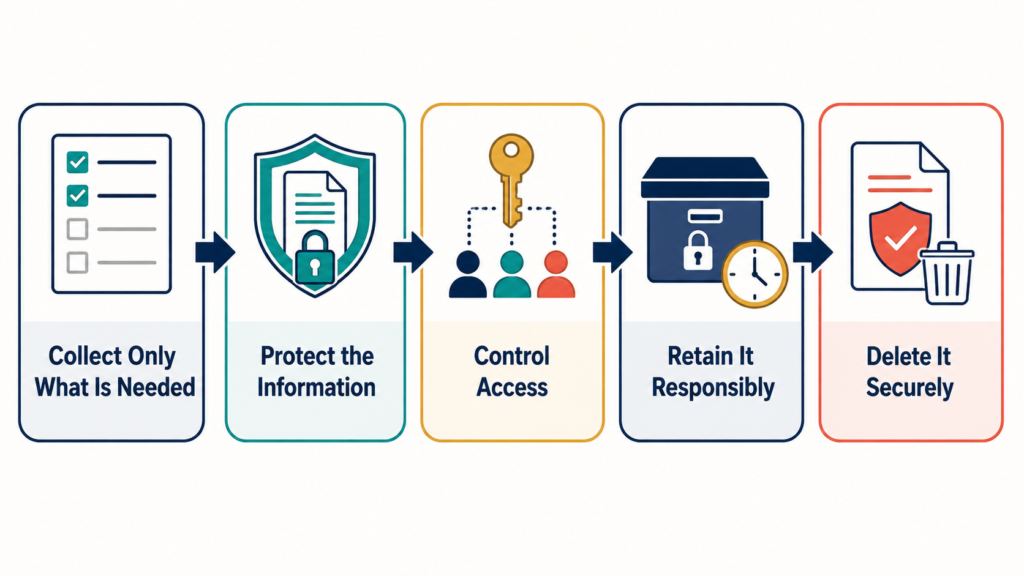
Members should receive a clear privacy notice explaining what information is collected, why it is needed, how long it will be kept and whether it will be shared with service providers. They should also have a way to request access to their personal information or ask for inaccurate information to be corrected.
Committee members must only access information required for their responsibilities. For example, an ordinary member should not be able to view another member’s identity documents, banking details or private payment records. Access should also be removed promptly when an administrator or committee member leaves the stokvel.
If a security compromise occurs, the responsible party may have reporting and member-notification obligations. The Information Regulator states that POPIA does not provide a risk threshold below which a security compromise can simply be ignored. Its security-compromise guidance says reportable incidents must be reported and affected data subjects notified.
A privacy policy alone does not prove that a platform complies with POPIA. When comparing products, check whether the provider can explain its security measures, data-retention practices, hosting arrangements, access controls, incident procedures and responsibilities when processing information on behalf of a stokvel.
Communication and Notifications
Clear communication helps a stokvel operate smoothly and keeps members informed about important activities. A Stokvel Portal brings announcements, reminders and financial notifications into one organised platform instead of relying entirely on scattered WhatsApp messages, phone calls or paper notices.
Authorised committee members can publish announcements about meetings, contribution dates, rule changes, payouts and other stokvel matters. Members can then view these messages when they sign in, creating a reliable record of what was communicated and when.
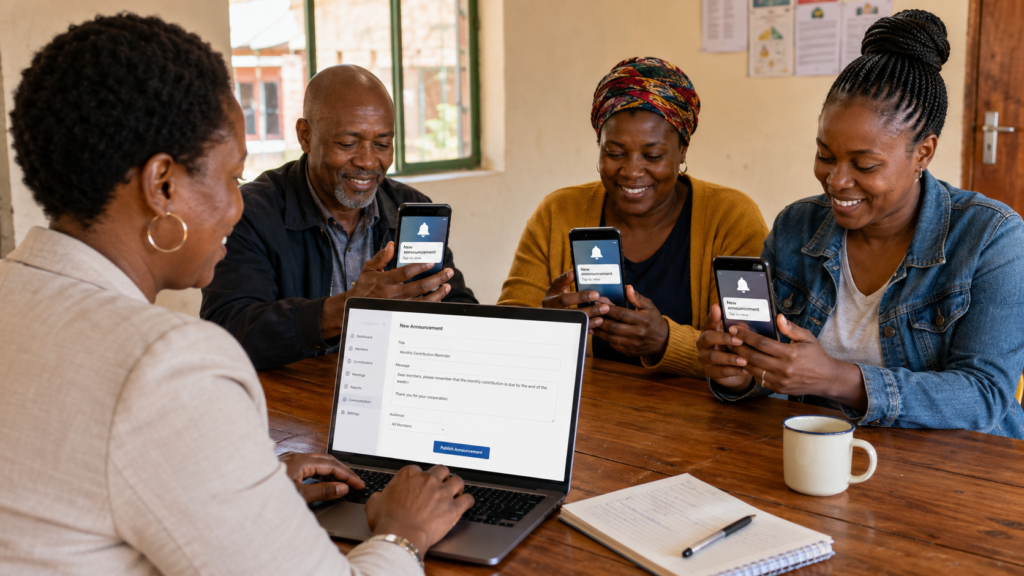
A Stokvel Portal may send notifications for events such as:
- Upcoming contribution deadlines
- Successful payment-proof uploads
- Payment-proof approvals or rejections
- Missed or overdue contributions
- Upcoming committee meetings
- Payout requests and approvals
- Completed member payouts
- New reports or statements
- Changes to membership information
- Important security or account activity
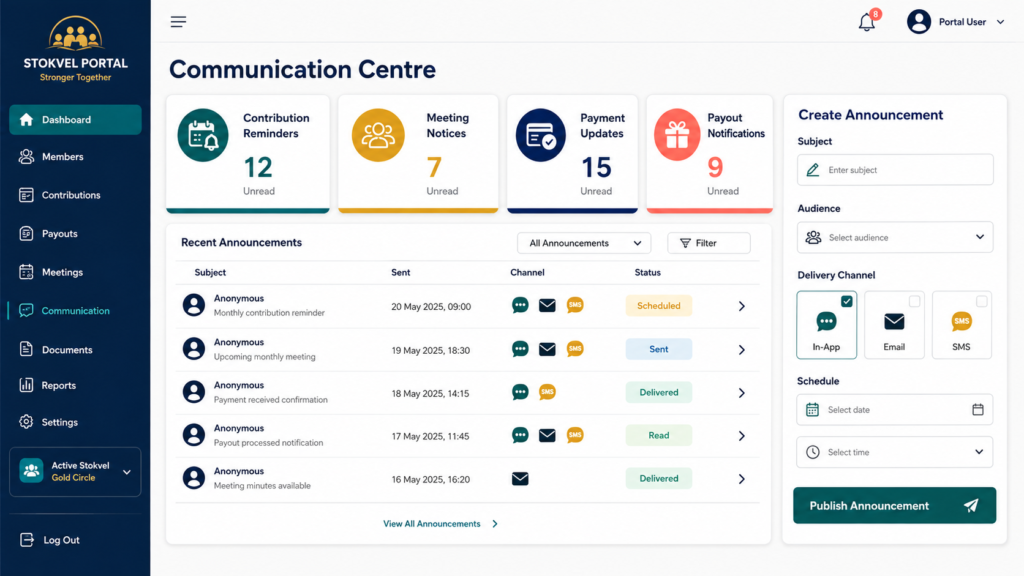
Notifications may be delivered through the platform, email, SMS or mobile push messages. Allowing members to select their preferred channels can make communication more effective while preventing unnecessary or repeated messages.
The system should also distinguish between general announcements and private notifications. A meeting notice may be visible to the entire stokvel, while information about a member’s arrears, payment proof or payout should only be sent to that member and authorised committee officials.
Automated reminders reduce the administrative burden on the secretary and treasurer. Instead of contacting every member individually, the committee can schedule reminders before and after contribution deadlines.
Communication records can also help resolve disputes by showing when a notice was sent, who received it and whether it was opened. However, messages should be relevant, secure and managed according to the stokvel’s privacy rules.
When comparing platforms, check whether notifications can be scheduled, customised and sent through multiple channels. A reliable Stokvel Portal should help the committee communicate consistently without overwhelming members with unnecessary alerts.
Mobile Accessibility and Ease of Use
Many stokvel members rely primarily on smartphones to access online services. A Stokvel Portal should therefore work smoothly on mobile phones, tablets, laptops and desktop computers without requiring members to purchase special equipment.
A mobile-friendly design automatically adjusts menus, forms, tables and buttons to fit different screen sizes. Members should be able to read announcements, check contribution records, upload payment proofs and download statements without repeatedly zooming or scrolling sideways.
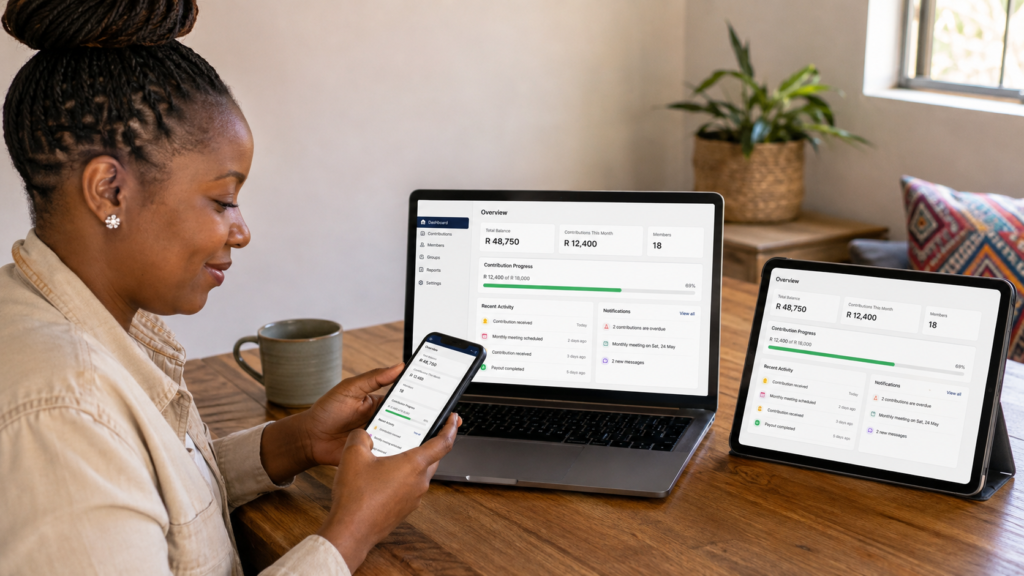
Important mobile functions may include:
- Registering and signing in securely
- Viewing personal contribution records
- Uploading proof of payment
- Receiving reminders and notifications
- Checking outstanding balances
- Viewing or downloading member statements
- Confirming meeting dates and announcements
- Tracking payout progress
- Updating contact information
- Requesting help or support
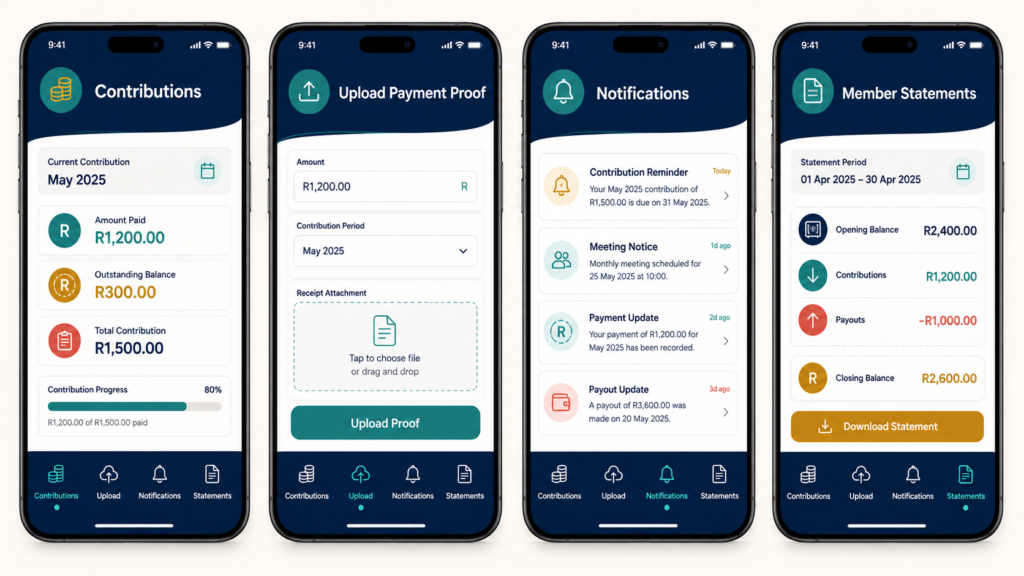
The Stokvel Portal should use clear language, readable text and familiar icons. Menus should be simple, important actions should require as few steps as possible, and forms should explain errors clearly when information is missing or entered incorrectly.
Performance is equally important. Pages should load quickly and use data efficiently, especially for members using limited mobile data or slower internet connections. Uploaded documents and images should be compressed where appropriate without making payment proofs difficult to read.
Accessibility should also be considered. Good colour contrast, sufficiently large buttons, keyboard navigation and clearly labelled form fields can make the platform easier to use for members with different abilities and levels of digital experience.
Before selecting a platform, test its most important tasks on an ordinary smartphone rather than relying only on a desktop demonstration. A reliable Stokvel Portal should allow both committee members and ordinary members to complete everyday tasks easily, regardless of the device they use.
Plans and Value for Money
Stokvel Portal uses simple, flat monthly pricing based on the total number of members in the group. It does not charge a separate fee for every member, making monthly costs easier to understand and budget for.
The current Stokvel Portal plans are:
- Free Forever: R0 per month for groups with 1–20 members
- Growth 50: R49 per month for groups with 21–50 members
- Growth 100: R99 per month for groups with 51–100 members
- Growth 250: R199 per month for groups with 101–250 members
- Enterprise: Custom pricing and onboarding for groups with more than 250 members
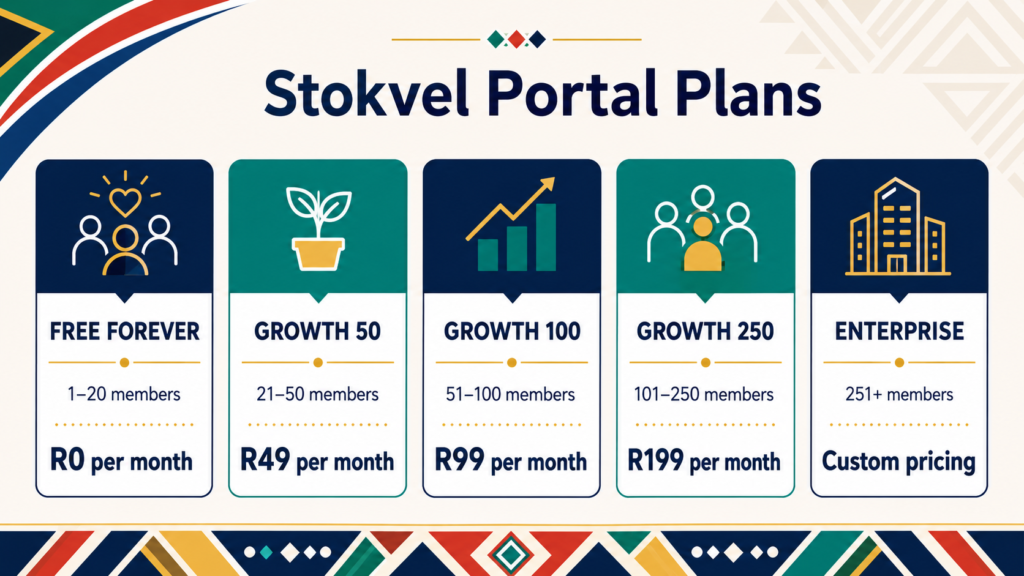
Groups on the Free Forever plan do not need to provide a credit card, pay a setup fee or worry about the free access expiring. This makes the platform accessible to small stokvels that want to organise their administration without adding another monthly expense.
The paid plans also use one flat monthly fee for the entire organisation. There are no per-member calculations or setup fees, and users can access the platform from anywhere. A stokvel can therefore move to the appropriate plan as its membership grows while keeping its software expenses predictable.
When comparing value for money, committees should consider more than the subscription amount. They should also assess whether the Stokvel Portal can reduce manual record-keeping, improve financial transparency and save committee members time. The best plan will normally be the one that supports the group’s current membership while leaving reasonable room for growth.

Customer Support and Training
Reliable support is important when a stokvel moves from paper records and spreadsheets to a digital platform. Committee members may need help setting up the group, adding members, recording contributions and understanding the available financial tools.
Stokvel Portal is currently in active beta. Users can submit support questions, bug reports, improvement ideas and operational feedback through the website’s contact form. Support is also available by email at support@stokvelportal.com. These direct channels allow users to explain their problems and provide relevant information about their stokvel. See the current Stokvel Portal contact page.
The platform also advertises free onboarding assistance for early groups. This may be valuable for committees that need guidance when registering their organisation and introducing members to the system. However, the live website does not currently publish guaranteed response times, telephone-support hours or details of a structured training programme.
Before selecting a stokvel Portal, committees should compare the following support and training factors:
- Available support channels
- Onboarding assistance
- Tutorials and user guides
- Training for committee members
- Support response times
- Help with technical problems
- Assistance with moving existing records
- Ongoing product updates and user communication
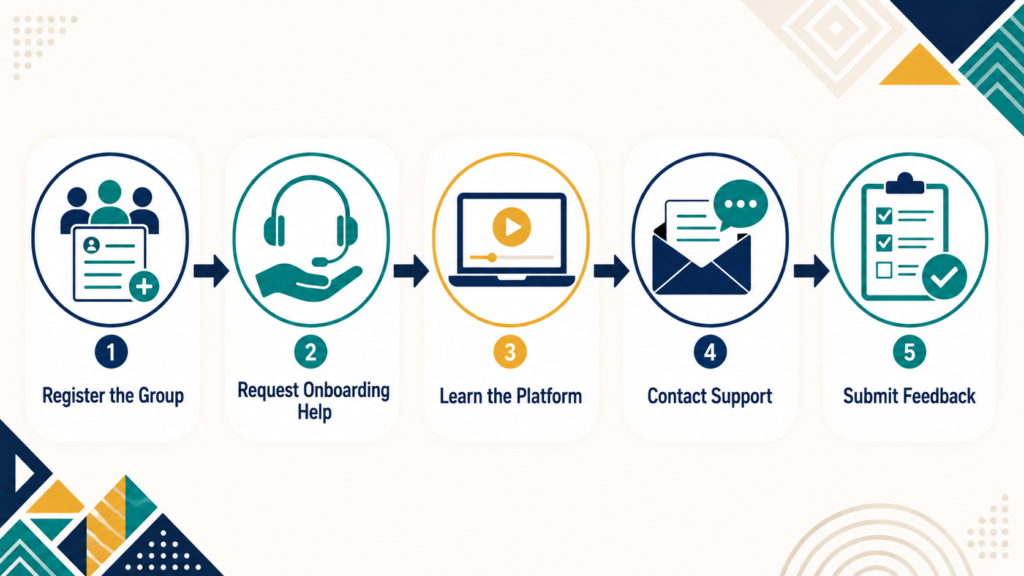
Because Stokvel Portal is still being improved using real-world feedback, prospective users should confirm what onboarding or training assistance is currently available before registering. Larger organisations may also want to ask whether dedicated implementation support can be arranged.
Best Platform for Different Stokvel Types
The best stokvel Portal depends on the group’s purpose, size and administrative requirements. A small savings group may only need contribution tracking, while a large burial society may require detailed permissions, payout controls and financial reports.
Savings Stokvels
Savings stokvels need a simple way to record regular contributions, identify missed payments and maintain an accurate history for every member.
Stokvel Portal is a suitable option for groups that want to:
- Track member contributions
- Monitor outstanding balances
- Store payment confirmations
- Maintain organised financial records
- Record payouts and distributions
Small savings groups with no more than 20 members can also use the Free Forever plan.
Burial Societies
Burial societies normally manage regular contributions and time-sensitive benefit payments. Their chosen platform should provide reliable member records, payment histories, controlled access and clear disbursement records.
Stokvel Portal may suit burial societies that want to improve accountability and move away from notebooks or scattered WhatsApp messages. However, committees should confirm whether the platform’s current payout process meets their rules for claims, beneficiaries and emergency approvals.
Grocery Stokvels
Grocery stokvels collect contributions throughout the year before purchasing or distributing groceries. They need accurate contribution records and a clear view of which members have paid in full.
A stokvel Portal should help these groups monitor payments, outstanding balances and distributions. Stokvel Portal provides the core record-keeping tools needed for these activities, although each group should confirm how its specific grocery purchases and allocations will be recorded.
Investment Clubs
Investment clubs require contribution tracking and transparent financial records, but they may also need portfolio valuations, dividend records and investment-performance reporting.
Stokvel Portal can assist with membership, contributions, payment proofs and general financial administration. Banking integrations, smart financial analytics and investment tools are described as possible future developments, so clubs requiring advanced portfolio management may still need specialist investment software.
Rotational Stokvels
Rotational stokvels pay the collected amount to a different member during each contribution cycle. These groups need clear payment histories, an agreed payout order and records showing when each member received funds.
Stokvel Portal may be appropriate when the main goal is to organise contributions and record distributions. Before registering, the committee should confirm that the current system can accommodate its rotation schedule and approval rules.
Large Societies and Community Groups
Large groups need stronger controls because more members, transactions and committee roles increase administrative complexity. Important features include role-based access, reliable reports, centralised records and predictable pricing.
Stokvel Portal offers flat monthly plans for groups with up to 250 members, while organisations with more than 250 members can request Enterprise pricing and onboarding. Larger societies should discuss their data-migration, training and support requirements with the platform before implementation.
Which Type Is the Best Fit?
Stokvel Portal is likely to be a strong fit for savings groups, grocery stokvels, rotational clubs and burial societies that mainly need organised member, contribution and disbursement records. It can also support the general administration of investment clubs, although specialist investment features may be required separately.
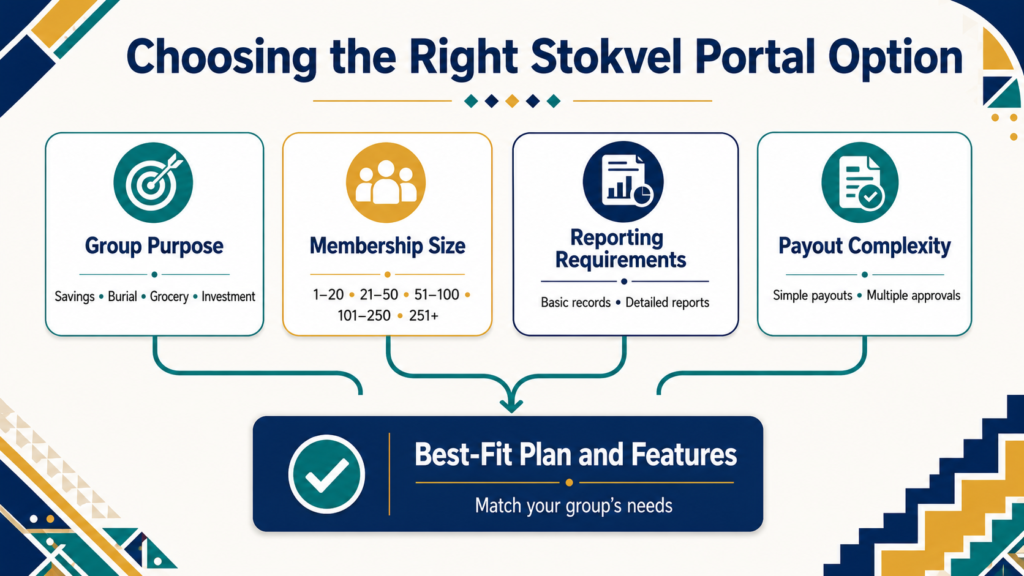
Before choosing any platform, the committee should list its essential processes, test the available features and confirm that the system supports its constitution and approval rules.
Conclusion
Choosing the right stokvel Portal can make it easier to manage members, track contributions, verify payment proofs, record payouts and maintain transparent financial records. The best platform should suit the group’s purpose, membership size, rules and level of administrative complexity.
Stokvel Portal provides a South African-focused solution for savings clubs, burial societies, grocery stokvels, investment clubs and other community financial groups. Its centralised records, flat monthly pricing and Free Forever plan for groups with up to 20 members make it an accessible option for stokvels moving away from notebooks, spreadsheets and scattered WhatsApp messages.
However, every committee should review the current features carefully. Consider the platform’s reporting capabilities, security controls, mobile accessibility, support options and payout processes. Groups should also remember that Stokvel Portal is in active beta and that some advanced integrations are described as future developments.
Before making a final decision, identify your group’s essential requirements, involve committee members in the evaluation and test the platform with a small set of records. This will help determine whether Stokvel Portal can support the group’s constitution, approval processes and long-term growth.
For groups seeking a more organised and transparent way to manage their administration, Stokvel Portal is worth considering.